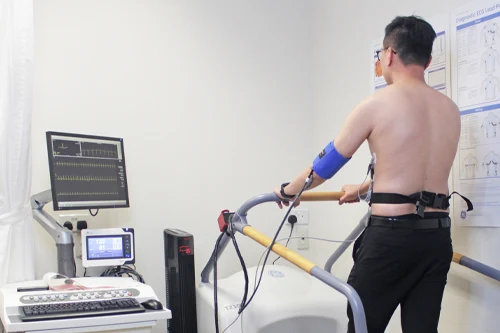
A treadmill stress test, also called a stress ECG or treadmill exercise test, is used to diagnose potential heart-related causes of symptoms such as chest pain, breathlessness or light-headedness, by observing how the heart responds to increasing levels of exertion. An exercise stress echocardiogram (ESE) is similar to stress ECG but with echocardiogram before and immediate post exercise, increasing the test accuracy.
01Why It’s Done
Dr Lee may recommend this for patients with:
Investigating chest pain or breathlessness or palpitation on exertion
Assessing for coronary artery disease
Evaluating exercise tolerance and fitness for activity
Assessing abnormal heart rhythm
02How It Works
You are connected to ECG and blood pressure monitors.
You walk on a treadmill as the speed and incline increase every 3 minutes.
Your heart rate, rhythm, blood pressure and ECG tracings are recorded throughout.
The test is stopped when a target is reached or symptoms develop.
03Duration, Recovery & What To Expect
Most patients exercise for 10 to 12 minutes on average. You may feel tired afterwards but can usually resume normal activities the same day. Wear comfortable clothing and shoes suitable for walking.